Blog Post 2 - Rawan Hussain
Hidden Disabilities
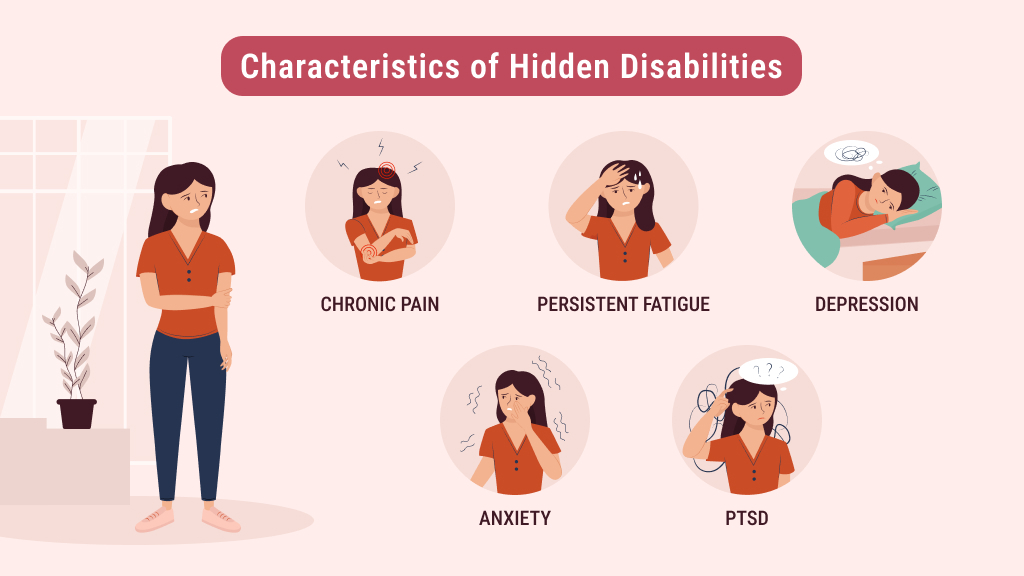
This presentation was about the different mental disabilities that many people struggle with. I really like this idea since we cannot truly understand what these people go through, so the best we can do is research about mental disabilities. The different hidden disabilities assigned were Dyslexia, ADHD, Autism, anxiety, and OCD. We were assigned autism, or autism spectrum disorder.
We separated the work and created groups of two or three. The different parts were research around autism, the history behind this disability, the United States vs the world, interviews, and finally the different organization helping autistic people. My small group was assigned research behind ASD. I was in charge of the different types of autism, Jenifer was taking care of the nonverbal aspect of autism, and Camilo was working on the research done today and the past on this disability. I really enjoyed working with them. We had great communication and understanding, which greatly facilitated this process.
Doing research on this topic opened my eyes to the daily struggles that autistic people and children face. While I was aware about autism, I was only truly educated about autism spectrum disorder. I was not aware of both Rett syndrome and Childhood Disintegrative Disorder. These types of autism are the worst kind when it comes to functioning in their day-to-day lives, especially since these children lose a lot of the abilities they gained like speech recognition. Some even develop seizures due to these diseases. This is hard for the people affected and the families and parents who see their child slowly lose their ability to speak.
Even though there are bad cases like the two previously mentioned diseases, it is important to remember that these cases are very rare. What 1% of the world population faces is ASD, which affects their day-to-day life without restricting them from doing activities that everyone else does. Learning about autism as a child will permit the child to develop effective strategies to deal with the disorder. When dealing with someone with autism, it is important to remember that we are speaking to someone with a different way of thinking, which is never a bad thing. Having different perspectives is important; narrow-mindedness is a bad characteristic to have.
While I find this project to be a success, we had a couple of students who either did not follow their assigned parts, or just did not do the work. A student was assigned “United States vs world;” however, the day of the presentation, I found out that they did a completely different part, so we did not cover United States vs world. This, in my opinion, is a bad thing since different cultures have different perspectives on this disorder, and knowing these different perspectives is eye opening to the challenges faced by people who have autism. Thankfully, the two students who did not do their part in the presentation were part of different groups. This meant that their partners could cover their parts once they realized these students were not going to participate. It is still awful that the partners had to cover for them.
The group that presented after us were presenting on ADHD and Dyslexia, both disabilities which can affect someone’s schooling and learning process. ADHD, attention-deficit/hyperactive disorder, is a disorder that affects someone’s ability to stay focused. It was interesting to see someone who deals with this disorder present it since he gave a more personal perspective on this disorder instead of being superficial. Dyslexia affects someone’s ability to read and write. The video presented on dyslexia was very helpful since it let us understand what children with dyslexia see when they see a huge text.
This group did a great job of going into the details of each disorder. They did go over the allotted time; however, when dealing with these discussions, it is understandable that they would want to cover as much as possible. Not only is understanding the disorder important, but also understanding how people with them live their day-to-day lives and how to accommodate them in a school/work environment.
The group after presented on anxiety and OCD. Anxiety is felt by everyone at least once in their lives; however, when someone constantly has anxiety symptoms, then it is considered a disorder. People with this disorder can develop other disorders like social anxiety, panic disorder, and obsessive-compulsive disorder. They live in constant worry about different aspects of their lives, some worries are part of ordinary life. Due to stress, they can develop many physical symptoms, like sweating and trembling.
People with OCD deal with intrusive or obsessive thoughts that cause them stress. This leads them to act repetitively and create methods to deal with these thoughts. Some people must check their locks 20 times before going to sleep for example. These kinds of actions can intrude onto one’s life, especially their relationships, work, and other responsibilities.
My favorite part about all these presentations are the interviews. We can include the people with these disabilities in this conversation. It is important to hear the voices of those who are affected by these different invisible disabilities since they give us a more humane understanding of what they go through; it is easier to relate to someone than to studies written by different psychologists.
In conclusion, while I do not have any invisible disorder, these presentations opened my eyes to them. I must be understanding when people do not act in the preconceived way that society taught me is normal; some people deal with different ways of thinking or processing information. Some even have difficulty living their day-to-day lives due to extreme stress and fear. While I do have stress due to school and work, I cannot imagine this stress being constant. We must embrace differences in people, and we must start by opening our minds to different world views due to these disabilities.
Excellent reflection and post.
ReplyDelete